

News Center
14
2018
-
06
Analysis of the Cost Composition of Industrialized Production of Carbon Fiber and Low-Cost Strategies
Carbon fiber and its composite materials are important structural materials with high technological content, featuring a series of advantages such as high specific strength, high specific modulus, light weight, high temperature resistance, corrosion resistance, fatigue resistance, and low thermal expansion coefficient. They are widely used in fields such as aerospace, strategic weapons, automotive, transportation, energy, construction, and sports equipment. Due to the specificity of their application fields, foreign countries have implemented a monopoly blockade on high-performance carbon fiber technology and high-end processing equipment, while low-end carbon fiber products are being dumped into our country. Large foreign enterprises, such as those from Japan, occupy over 95% of the global carbon fiber market and use their technological and scale advantages to drive down prices, forcing domestic companies to lower their prices.
Author:
Carbon fiber and its composite materials are important structural materials with high technological content, featuring a series of advantages such as high specific strength, high specific modulus, light weight, high temperature resistance, corrosion resistance, fatigue resistance, and low thermal expansion coefficient. They are widely used in aerospace, strategic weapons, automotive, transportation, energy, construction, and sports goods. Due to the specificity of their application fields, foreign countries have implemented a monopoly blockade on high-performance carbon fiber technology and high-end process equipment, while low-end carbon fiber products are being dumped into our country. Large foreign enterprises, such as those from Japan, occupy more than 95% of the global carbon fiber market and use their technological and scale advantages to lower prices, forcing domestic companies to reduce their prices. The impact of foreign low-price dumping and malicious competition has led to production costs exceeding the prices of imported similar products, resulting in losses across the industry. Significant fluctuations in upstream carbon fiber prices greatly affect the costs of downstream composite material companies, restricting the healthy development of China's carbon fiber composite material industry. Furthermore, with the gradual production of carbon fiber projects in countries such as Turkey, South Korea, Russia, India, and Saudi Arabia, and the gradual release of domestic carbon fiber production capacity, competition in the carbon fiber market will become even more brutal.
Cost has become a significant burden for domestic carbon fiber production companies, but it is also the only way to break through. Although some companies have achieved profitability by relying on high prices in high-end fields, the competition is still fierce, and the future market competition mainly exists in the civilian sector. This article analyzes the cost composition of polyacrylonitrile-based carbon fiber production based on the actual situation of the company's thousand-ton production facility, and proposes low-cost strategic planning and cost-reduction measures in conjunction with the company's actual situation.
1. Overview of the Carbon Fiber Production Process
The production of polyacrylonitrile-based carbon fiber mainly includes two processes: precursor production and precursor carbonization. The precursor production process mainly includes polymerization, degassing, metering, spinning, drawing, washing, oiling, drying and densifying, and winding. To more directly and clearly present the cost composition of carbon fiber and better explain the views of this article, the precursor will be used as the raw material, with the market price of the precursor being approximately 29,000 yuan/ton.
In the carbonization process of the precursor, it first undergoes a pre-oxidation treatment, forming an aromatic ring structure inside it. After further high-temperature treatment of the pre-oxidized fiber, this heat-resistant structure will continue to evolve.[1]After the pre-oxidation stage comes the carbonization stage, which is usually carried out in an inert atmosphere with nitrogen as the gas. The main process parameters controlled during the carbonization process are time, temperature, and drawing. The device is shown in Figure 1. The carbonization process is divided into low-temperature carbonization and high-temperature carbonization stages based on different heat treatment temperatures, both of which adopt a multi-stage temperature control method.[2,3]The treatment time for the carbonization process is much shorter than that for the pre-oxidation process, with the pre-oxidation treatment time generally being about 60-90 minutes, while the combined treatment time for low-temperature and high-temperature carbonization is about 5 minutes.[4]After the carbonization process, the carbon fiber has been prepared. In industrial production, considering the subsequent application of composite materials, surface treatment, sizing, drying, and other processes are also required before winding to complete product preparation.

Figure 1Schematic diagram of the carbonization device
2. Composition of Carbon Fiber Costs
Due to differences among countries, research institutions, and production units, the habitual calculations of costs and cost structures also vary. This article combines the company's own situation to calculate costs on a monthly basis, dividing carbon fiber costs into fixed costs and variable costs. Fixed costs include equipment depreciation, labor costs, and management fees, while variable costs include the input of raw and auxiliary materials and fuel power costs, which are related to operating time and process level. Fixed costs vary based on the output within a unit time; the higher the output within a unit time, the lower the proportion of fixed costs in the unit product cost.
Therefore, when discussing cost composition, certain conditions should be defined. Taking a carbon fiber production facility with an annual designed capacity of 1,500 tons and a monthly actual output of 120 tons as an example:
The ratio of fixed costs to variable costs in product costs is shown in Figure 2:
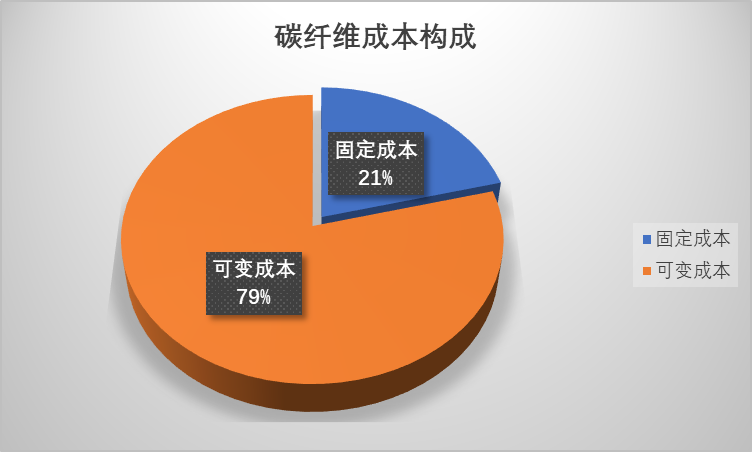
Figure 2 Ratio of fixed costs to variable costs in carbon fiber costs
As shown in Figure 2, when the monthly output of the facility reaches 120 tons, the proportion of fixed costs in carbon fiber costs is 21%. As the output continues to increase, the proportion of fixed costs will decrease. When the facility reaches its maximum load, the fixed costs will also reach their minimum value. Therefore, in the industrial production of carbon fiber, the production capacity of the facility should be maximized to effectively reduce costs from the perspective of fixed costs.
In variable costs, the proportions of raw materials, auxiliary materials, fuel power, and other expenses are shown in Figure 3:
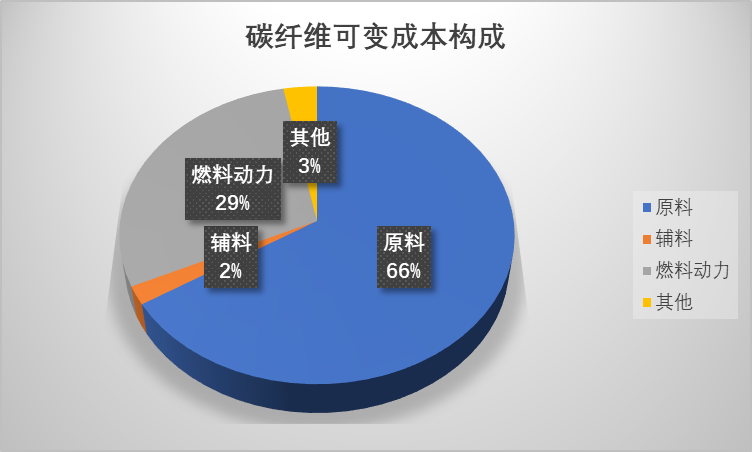
Figure 3 Composition of variable costs in carbon fiber production
From the composition of variable costs in Figure 3, it can be seen that raw materials account for 66%. In the carbon fiber production process, since the raw materials and processes are fixed, the carbon fiber yield is basically fixed, and the raw material consumption per ton of product generally does not change significantly. However, in variable costs, the ratio of raw material consumption to fuel power can reflect the operational and production level of a carbon fiber company. The higher the proportion of raw materials, the higher the utilization rate of fuel power during operation. Auxiliary materials mainly refer to the sizing agents used for carbon fiber, and the costs of imported versus domestically produced and purchased versus self-produced auxiliary materials have a significant impact.
In fuel power, the energy consumption for pre-oxidation accounts for about 33%, carbonization accounts for 46%, and the proportions of other processes are shown in Figure 4:
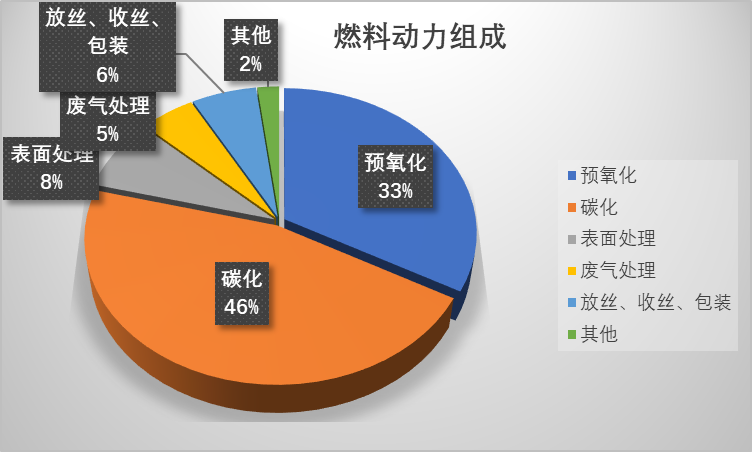
Figure 4 Composition of fuel power costs during carbonization
3. Low-Cost Strategy for Carbon Fiber
In 2018, the price of acrylonitrile rose sharply, leading to increased costs for precursors, carbon fibers, and even composite materials. Companies in the industry are struggling to survive. Resolving the contradiction between cost and selling price is a problem that carbon fiber production companies hope to address and must face. The implementation of a low-cost strategy is urgent. I believe that the low-cost strategy for carbon fiber should start from the following aspects:
(1) Effectively utilize production facilities and strive to improve the production rate.
Examples of "having production capacity but no actual output" in the carbon fiber field are not uncommon, and it is a helpless move, mainly due to unreasonable equipment design, extremely high operating costs, and the weak demand in the downstream application market, making it difficult to sell the produced products. However, if the equipment's production rate does not reach 80%-90%, low-cost production will always be out of reach (except for high-end suppliers). With a designed annual production capacity of 1500 tons for this equipment, the monthly designed capacity is about 136 tons, and the current monthly output is 120 tons, resulting in a production rate of 88.2%. If the actual monthly output is 100 tons, the production rate will be 73.5%, and the unit cost of the product will increase by 4%; if the actual monthly output can reach 150 tons, the production rate will be 110.3%, and the unit cost of the product will decrease by 4%. Additionally, the increase in production rate usually also combines with the optimization of processes and loads, and the unit cost of the product is expected to decrease by 6%-7%.
(2) Improve product quality and yield, and enhance production efficiency.
After determining the raw materials and processes, the material balance relationship is basically solidified, but the grade of the product and the full roll rate represent the price at which the product can be sold. Therefore, during the production process, it is essential to maximize the full roll rate of the product, improve the quality level of the product, reduce quality fluctuations, and enhance user acceptance, which is also an effective means of reducing costs. The cost of first-class and second-class products is the same, but the unit selling price differs by about 15%. Increasing the first-class product rate can effectively enhance the value of the unit product, indirectly reducing costs. For this thousand-ton device, the first-class product rate is usually around 93%. Increasing it by one percentage point can save the company nearly 25,000 yuan.
(3) Increase the intensity of process and equipment innovation to reduce fuel and power consumption.
With the continuous rise in the popularity of carbon fiber in recent years, some traditional process ideas and equipment have been disrupted, such as the testing of energy methods like radio frequency, microwave, and plasma. The design and development of new precursor fibers and the reduction of heat treatment time records are constantly being refreshed. The introduction of new equipment and technologies can effectively reduce the energy waste caused by traditional methods. Similarly, since the fuel and power cost accounts for a large proportion of the total cost, adopting new processes can effectively shorten process time. For example, using rapid pre-oxidation technology can reduce the pre-oxidation treatment time by about 50%, leading to a reduction of about 3.5% in unit costs, which is a significant cost-saving effect.
(4) Localization of equipment, localization of auxiliary materials, optimization of personnel, and reduction of fixed costs.
The production of carbon fiber requires high precision in equipment control. Currently, most key equipment from domestic carbon fiber manufacturers is imported, leading to high purchase prices and maintenance costs, as well as a long investment return period. After localization of the equipment, investment can be effectively reduced. In 2015, Jinggong Technology Co., Ltd. built the first domestic thousand-ton carbon fiber production device by absorbing and introducing advanced foreign technology, which operated smoothly and opened the path for equipment localization. Additionally, additives such as sizing agents are mostly imported and are more than twice the price compared to domestic manufacturers, limiting effective cost reduction. Developing sizing agents independently not only reduces costs and breaks monopolies but also improves product quality, thereby increasing product competitiveness and achieving efficiency gains. Reasonably allocating personnel and shift patterns can relatively reduce personnel cost input, thus achieving the goal of lowering fixed costs.
4. Cost reduction and efficiency improvement measures for carbon fiber.
This article proposes the following cost reduction measures based on an understanding of the carbon fiber production process and the actual situation of the equipment:
(1) Ensure that the carbon fiber device operates at full capacity. Based on the equipment's load capacity, optimize and increase the operating speed of the device to maximize output per unit time while ensuring product quality. Ensure the normal operating cycle of the device and reduce unplanned downtime.
(2) Break through rapid pre-oxidation technology. Reduce the pre-oxidation residence time through improvements in precursor fibers or process optimization.
(3) Implement online replacement of precursor fibers during the carbon fiber production process to avoid energy consumption and time waste caused by temperature fluctuations during downtime, while also preventing fluctuations in the temperature and atmosphere fields due to frequent temperature changes, ensuring consistency in product quality.
(4) Independently develop and produce sizing agents to reduce the proportion of auxiliary material costs.
(5) Reasonably optimize pre-oxidation and carbonization processes to avoid energy surplus.
(6) Achieve energy and water savings through technological transformation measures, such as adding waste heat recovery devices in the incineration system for steam production.
5. Conclusion
Undoubtedly, the path to low costs is the way for carbon fiber production enterprises to break through at this stage. Under the influence of traditional processes and concepts, the road to cost reduction will not be smooth. Analyzing the composition of carbon fiber costs can inform where efforts should be focused. Only by starting from the details and fully utilizing the changes brought about by technological and equipment innovations, and with the joint efforts of domestic carbon fiber peers, will the carbon fiber industry usher in a new spring.
Key words:
Recommend News
2019-03-20
2019-01-02

QUICK NAVIGATION
CONTACTS
Telephone:86-575-85781231
Fax: 86-575-85781331
Mobile:86-13757590576(WeChat)
E-mail:admin@ofantex.com